
In the Life Sciences industry, where data integrity, regulatory compliance, and absolute accuracy are non-negotiable, SAP Master Data Governance (MDG) plays a central role in ensuring enterprise-wide consistency of critical master data. However, implementing SAP MDG in such a highly regulated, complex, and interconnected environment comes with its own set of challenges.
But what are the benefits of SAP MDG once implemented? Why go through the complex undertaking? For Life Sciences companies, SAP MDG offers a robust solution to ensure high-quality, compliant, and consistent master data across the enterprise. By centralizing the creation and management of critical data such as products, suppliers, and materials, SAP MDG helps Life Science organizations meet stringent regulatory standards like FDA, EMA, and GxP while reducing the risk of non-compliance. Accurate and harmonized data supports faster time-to-market, streamlines supply chain and vendor management, and enables more efficient operations by minimizing manual corrections and reconciliations. With reliable master data, Life Sciences companies can also make better data-driven decisions, enhancing planning, quality control, and overall business performance.
Before we the advantages can be enjoyed, first the challenges must be overcome. From our deep experience, there we’ve seen seven that Life Sciences organizations commonly face with SAP MDG implementations. And we know the practical, proven strategies to overcome them.
Challenge 1: Managing user expectations with the SAP MDG user interface
In Life Sciences organizations, end users (e.g. regulatory affairs and quality assurance to R&D and manufacturing) are often accustomed to legacy SAP interfaces and traditional ways of working. SAP MDG introduces a governance-centric user experience, which can feel significantly different. If expectations are not managed from the outset, this can lead to resistance and slow adoption.
To overcome this, early and continuous stakeholder engagement is essential. Key users should be involved well before go-live through targeted demonstrations, hands-on workshops, and real-life business scenarios. These sessions should clearly communicate the business value of SAP MDG, such as stronger data governance, automated approvals, enhanced auditability, and regulatory readiness. When expectations are aligned early and supported by role-based training, adoption becomes smoother, and daily operations—especially those supporting regulatory submissions and product launches—remain uninterrupted.
Challenge 2: Inconsistent master data management practices
Maintaining a single, authoritative source of master data is not just a best practice. It is a regulatory obligation. Yet in many Life Sciences organizations, users continue to make unauthorized changes directly in downstream systems, bypassing SAP MDG. This creates data inconsistencies, weakens governance, and increases the risk of regulatory non-compliance.
SAP MDG must be enforced as the sole system of record for master data creation and change. This requires restricting update permissions in downstream systems and clearly communicating business and compliance risks. Positioning MDG as the enterprise governance hub ensures full traceability, audit-ready change history, and full alignment with regulatory bodies such as the FDA and EMA. This centralized approach significantly improves data quality while strengthening compliance posture.
Challenge 3: Inefficient mass changes and data consolidation processes
Life Sciences organizations manage vast volumes of highly complex data, ranging from product formulations and packaging specifications to supplier certifications and controlled substances. Inefficient mass update processes can slow operations, delay supply chain activities, and disrupt product availability.
Newer SAP MDG releases offer advanced mass processing and data consolidation capabilities, particularly through intuitive Fiori-based applications. These tools enable efficient bulk updates of material, vendor, and customer master data using guided workflows. By modernizing these processes, Life Sciences organizations can increase speed, improve accuracy, and ensure that mission-critical information is always available to support regulatory reporting and uninterrupted supply chains.
Challenge 4: Synchronization issues with reference data
Reference data such as country codes, regulatory classifications, unit-of-measure standards, and product hierarchies play a foundational role across Life Sciences operations. Inconsistencies between SAP MDG and connected systems can quickly result in reporting discrepancies, supply chain disruptions, and compliance violations.
Life Sciences organizations should establish robust reference data synchronization frameworks using tools such as SAP Solution Manager, ALE Customizing Distribution, or SAP Data Services. When reference data is consistently aligned across all systems, regulatory reporting becomes more reliable, operational risks are reduced, and cross-system processes flow seamlessly.
Challenge 5: Delays caused by overly complex approval workflows
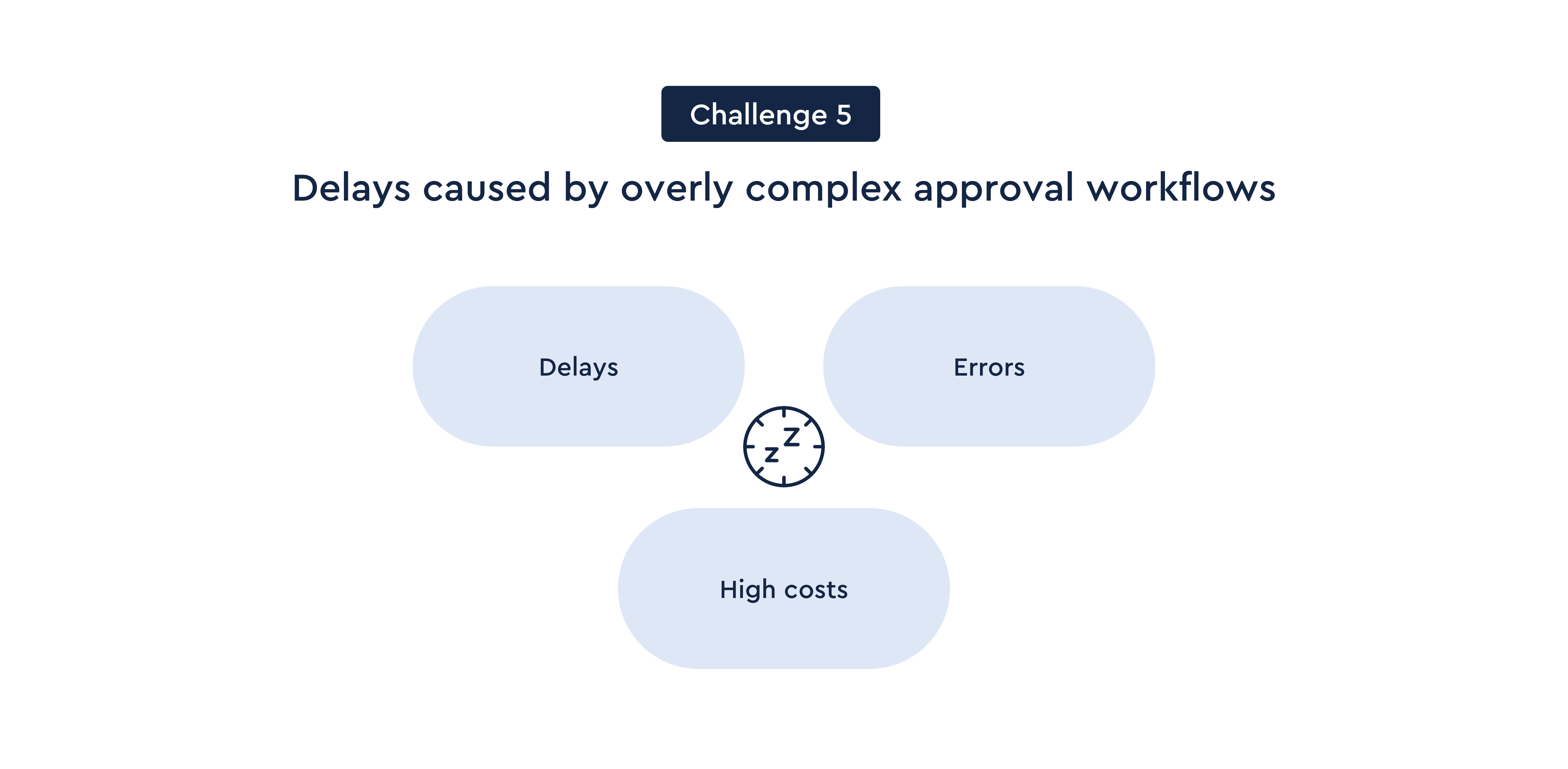
Due to stringent regulatory expectations, Life Sciences companies often design highly layered approval workflows for master data changes. While governance is critical, excessive complexity can introduce delays that negatively impact time-to-market and business agility.
SAP MDG workflows should be carefully optimized to balance strong governance with operational efficiency. This includes defining intelligent routing rules, eliminating unnecessary approval layers, and introducing fast-track approval paths for urgent and low-risk changes. This approach preserves compliance while enabling faster response to business-critical updates.
Challenge 6: Poor initial data quality at the start of MDG programs
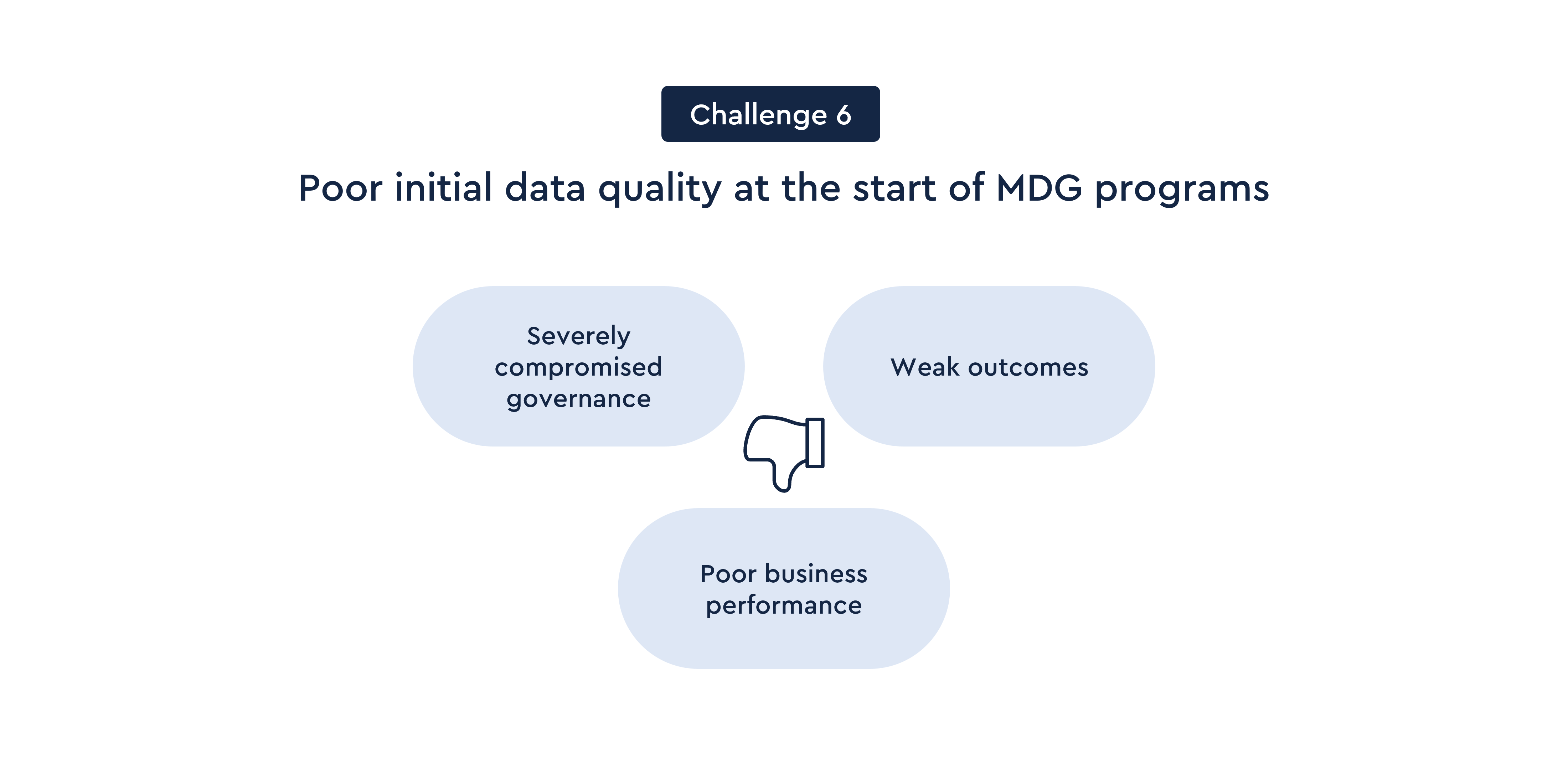
High-quality master data is the backbone of Life Sciences operations, It supports everything from clinical trials and pharmacovigilance, to manufacturing and distribution. If poor-quality data is introduced into SAP MDG at the beginning of the program, it can severely compromise governance outcomes and business performance.
Data cleansing must be treated as a formal, mandatory program phase before SAP MDG migration. This includes de-duplication, standardization, enrichment, and validation. Once live, SAP MDG’s built-in data quality rules, validations, and approvals should be leveraged to sustain governance. A clean foundation ensures stronger regulatory compliance, improved analytics, and smoother operational execution.
Challenge 7: Ineffective rollout strategies across complex system landscapes
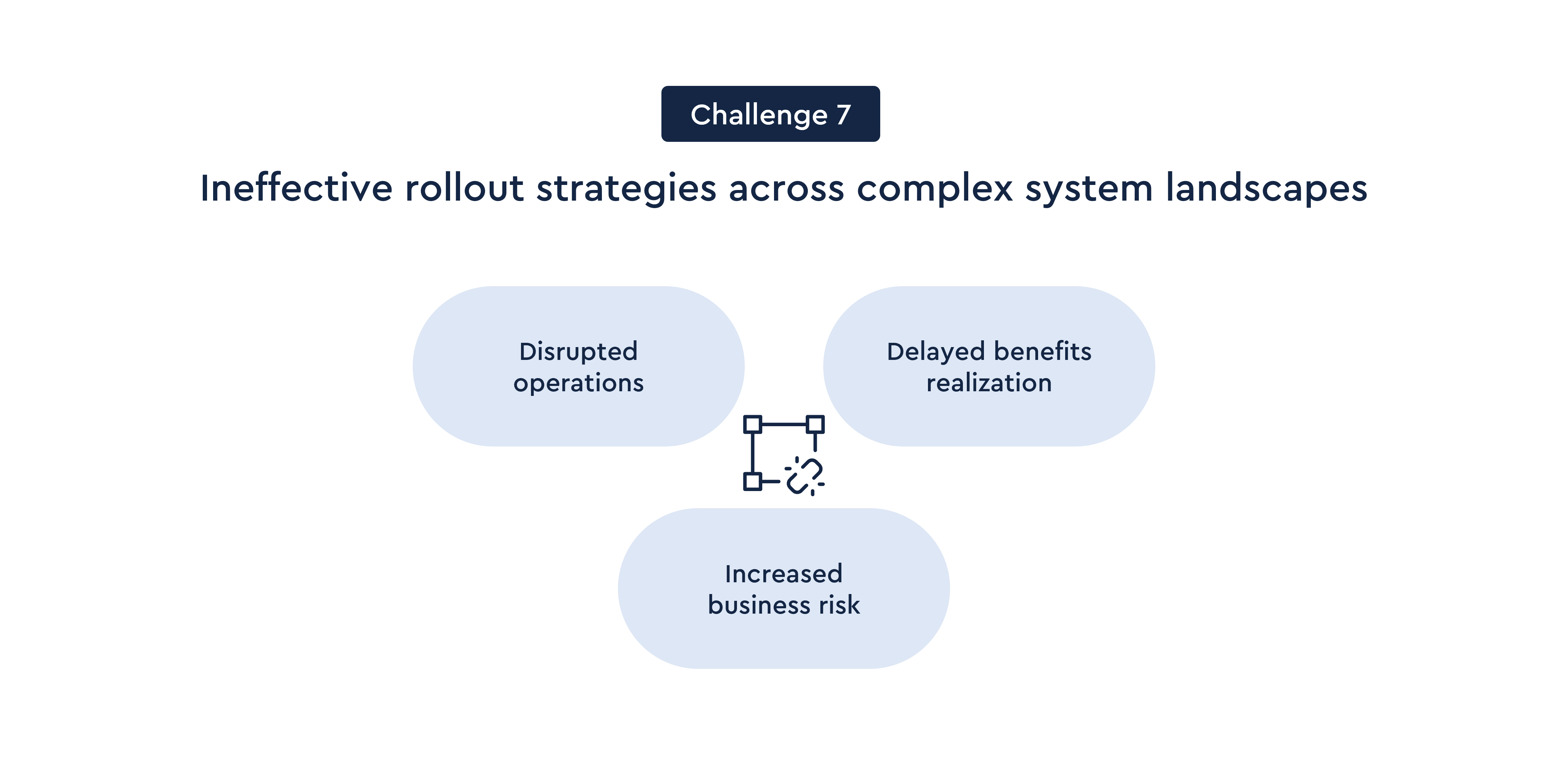
Life Sciences IT landscapes are inherently complex, with tight integration across ERP, LIMS, manufacturing execution systems (MES), quality systems, and supply chain platforms. Poorly coordinated SAP MDG rollouts can disrupt operations, delay benefits realization, and increase business risk. It is critical that this is avoided.
That’s why a robust, dependency-aware rollout strategy is essential. Release planning must align with the upgrade and deployment cycles of all connected systems. Stakeholders from IT, business, regulatory, and validation teams must be jointly involved. A phased deployment—starting with limited, low-risk data domains and scaling progressively—enables controlled testing, regulatory validation, and stable business adoption.
Conclusion: Leveraging Data Fabric and Data Mesh for the next level of data governance
While SAP MDG provides a powerful foundation for enterprise master data governance, Life Sciences companies can significantly amplify its impact by integrating advanced data architecture concepts such as Data Fabric and Data Mesh.
Data Fabric delivers a unified architectural layer that connects disparate data sources across the enterprise. In Life Sciences environments—where data spans clinical systems, manufacturing plants, quality platforms, and regulatory databases—Data Fabric enables real-time, scalable, and compliant access to trusted data for operational and regulatory decision-making.
Data Mesh, by contrast, decentralizes data ownership and aligns it with business domains such as R&D, manufacturing, supply chain, and commercial operations. This domain-driven approach reduces data bottlenecks, improves accountability for data quality, and accelerates innovation across scientific and operational teams.
Together, when SAP MDG is combined with Data Fabric and Data Mesh, Life Sciences organizations achieve a highly resilient, scalable, and future-ready data governance ecosystem. One that not only ensures compliance but also drives agility, collaboration, and competitive advantage in a rapidly evolving regulatory environment.



INSIGHTS
Related insights


It’s been almost 20 years since data scientist Clive Humby made the proclamation that “Data is the new oil”. This could not be...


Every year more than half of the clinical trial drugs manufactured never reach patients. These unused supplies, known as clinical...


The shift to patient centricity, AI, and digital ecosystems is disrupting the Life Sciences industry. What was once a...